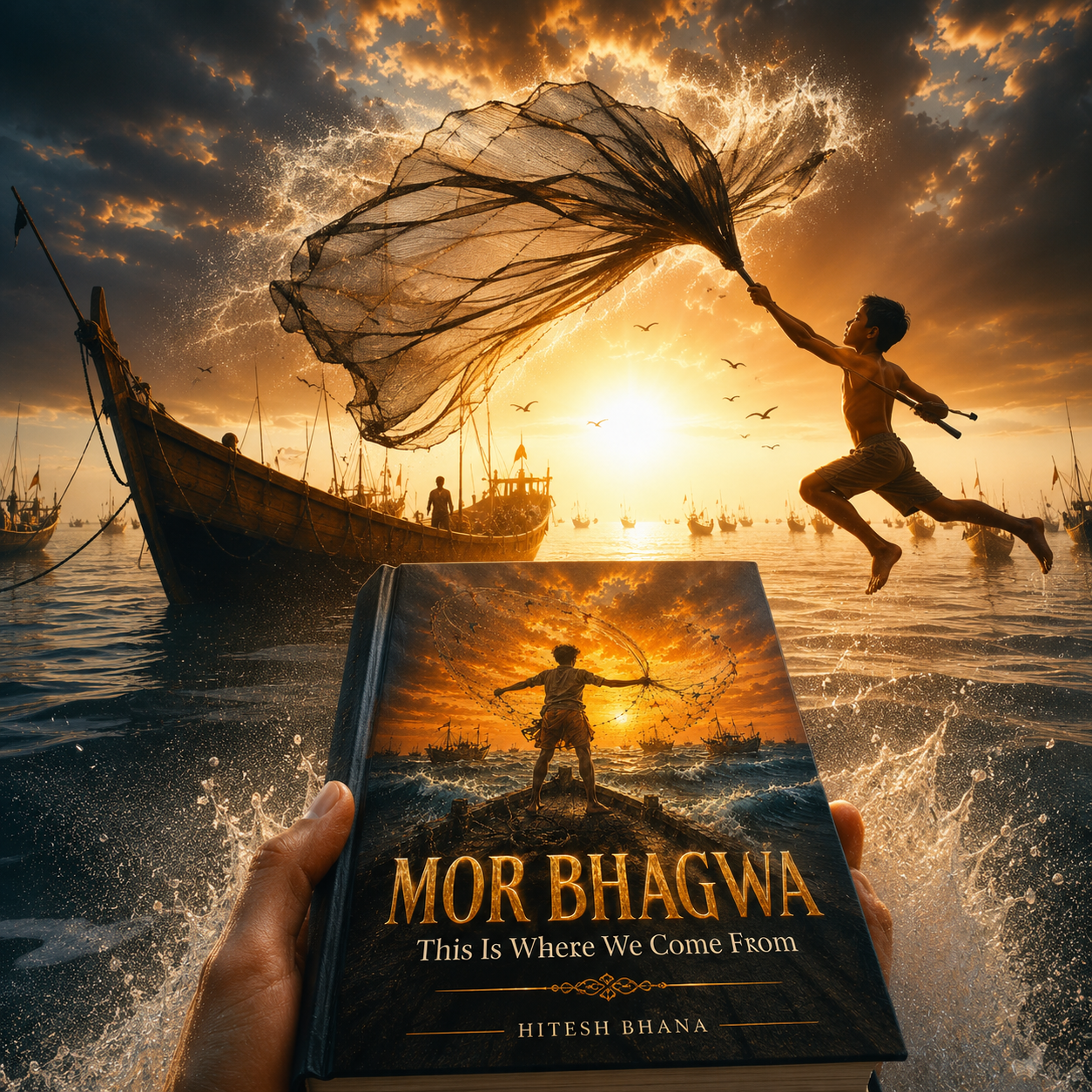
Mor Bhagwa: This Is Where We Come From
By Hitesh Bhana · Surat
The history, migration, culture, and future of our community — the people of Mor, Bhagwa, and Delasa — told across twenty chapters, from the ancient shore to the present day.
Our ancestors were not kings or merchants. They were sailors and fishermen, women who carried water and men who read the tides. Their wealth was the sea. Their office was a wooden boat. This book is their record.
What's Inside
The book opens in 1920, with a love story: Maanki and Keshav, and how their marriage crossed a line the village was not ready for.
Where we came from. A submerged settlement 27 kilometres off our shore. The Indus Valley port at our doorstep. A king's ceremony recorded in 1050 AD. The Gohils crossing the Gulf in 1347, and the sword found in a family home six centuries later. Three hundred years of Parsi presence in Bhagwa, and the quiet way it ended.
Who we are. Fadia by fadia, surname by surname. Where each family name came from and what it once meant. Our Gamthi language and how migration has been changing it. The kehvats — the sayings that carried the community's judgement in one line.
The leaving. Jamshedpur, Bombay, Surat. Then Africa, on trade routes that ran from Surat to Zanzibar. Then Britain, by four completely different routes in the early 1960s. The gifts that came back from the UK and the dreams they started.
The work. Four hundred years of shipping, from wooden trading vessels to officer ranks on modern ships. The Gulf years, and what a fitter earned in Dubai against what he earned at home. The shrimp farming boom in the Jhinga Tadav — the golden era, the sudden wealth, and the collapse that followed.
The women. A full chapter on the generation who ran three villages while the men were on other continents — their days, their households, the mothers-in-law, the ghunghat, and the homes left fatherless by migration and by the sea. Told plainly, including the parts that are hard to read.
How we lived. Weddings from the 1900s to now, and why finding a match became so difficult. Funeral rituals and the confusion that surrounds them. Food, from the years of scarcity to the delivery apps. Superstition, and what it cost. Faith before temples, and the rise of temples after.
The people. The first engineer. The first doctor, whose fee was five rupees. Hansi Khaja, who ran her own business alone in the 1960s. The first man from this community listed on the Indian stock exchange.
The stories. A flood that uncovered buried treasure. A whale beached at Mor. Gold smuggled through the creeks. The Huggi ghost of Mor village. And the woman who is said to have walked across from Bhavnagar to sell milk.
And the difficult chapters. The break with Dandi village that has lasted generations. The Bhare and Vapur divide. The mistakes our ancestors made, set down honestly rather than left out.
Then forward. Eleven projects worth building. A projection of this community in 2050. And a letter, written to be opened in 2075.
Read It
Read online, freeThis book is offered as a service to the community and is not intended for profit.